New to surfing? The complete beginner’s guide 2026
By DBP Adventures
9 April 2026
Updated 1
The ocean is calling – but do you know where to start?
This guide takes you through everything you need to know before you head out into the waves for the first time: from equipment and technique to rules, culture and the best destinations for beginners. Whether you’re dreaming about surfing or have already made up your mind – this is your starting point.
Why surf?
Standing on a surfboard for the first time is a feeling that’s hard to describe. It’s a mix of excitement, nerves and euphoria when you finally catch your first wave. But surfing is more than just a sport – it’s a way to challenge yourself and become part of a global community that shares the same passion for the ocean and adventure.
Why start surfing?
Surfing offers a range of benefits, both physical and mental:
- Physical health: Surfing works your entire body – balance, strength and endurance. It’s an excellent form of exercise that also takes place in nature.
- Mental wellbeing: Being in the water and focusing on the waves is a form of meditation. Many surfers describe it as a kind of therapy that helps reduce stress and anxiety.
- Community: Surfing is a social activity. Whether you’re a beginner or experienced, there’s always a community ready to share tips and laughs.
- Adventure: Surfing takes you to beautiful places around the world. It’s a way to discover new cultures, beaches and lifestyles.
What can you expect when new to the sport?
Learning to surf is a journey full of progress – but it comes with its challenges. Here are a few things to expect:
- Challenges: You will fall – a lot. You’ll feel tired and frustrated. But every time you get up on the board, you’ll feel genuinely proud.
- Lessons: You’ll learn about the ocean, waves, weather and your body in a completely new way.
- Rewards: That feeling when you finally “get it” – when you feel in harmony with the wave – is impossible to describe. It’s that feeling that keeps surfers coming back to the water, again and again.


The basics
It’s easy to picture a simple, and often very romanticised, image when you think about learning to surf. Surely you just jump on a surfboard out in the waves and everything will be fine?
No. It goes much deeper than that.
Let’s start with the equipment:
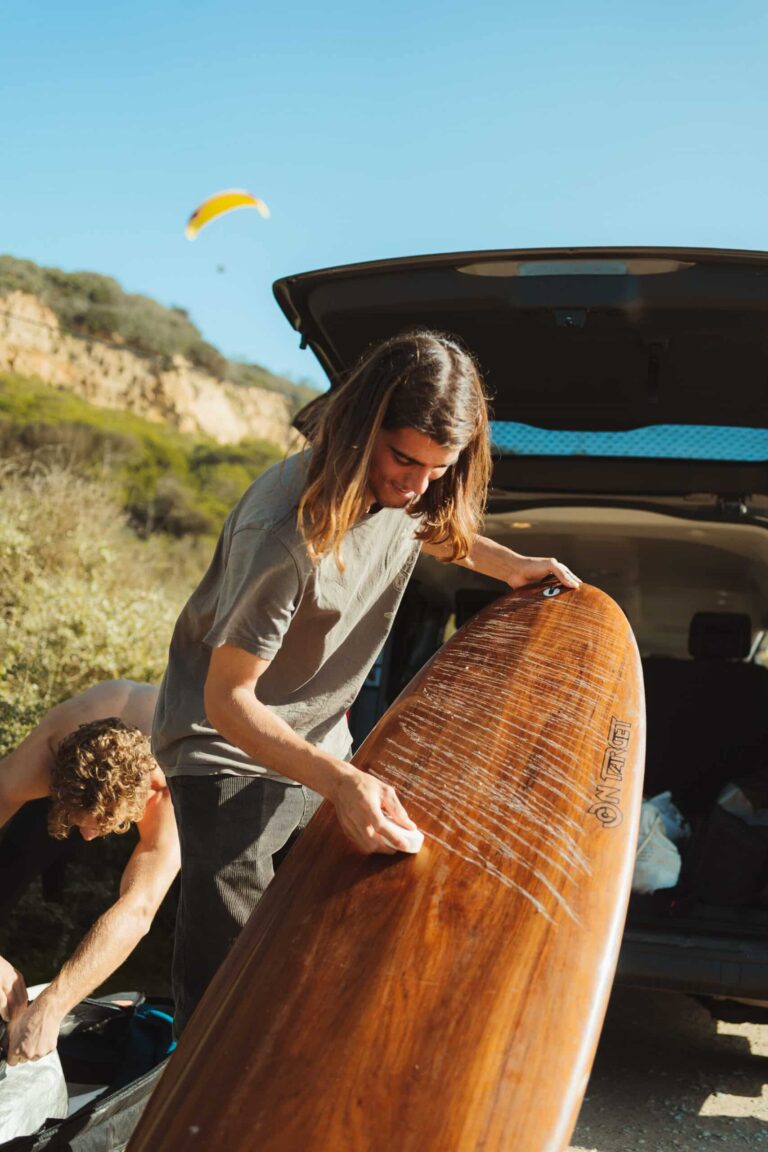
When you start, it’s recommended to begin with what’s called a soft top – and that’s for your own sake and everyone else’s. A softer board does less damage if it bounces back and hits your head or another part of your body, and the same goes if you lose your grip and it flies towards someone nearby. You shouldn’t surf with a hard top until you feel comfortable out in the waves.
Besides soft tops and hard tops, you’ll hear many different terms when it comes to types of surfboards. These include:
- Shortboard (a shorter board focused on manoeuvres on the wave)
- Longboard (a longer board focused on footwork and movement on the board)
- Midlength (a great transition from a soft top)
Then, depending on your destination, you’ll need a wetsuit or sun protection, wax and a leash. The great thing about learning at a surf school or camp is that all of this is usually included when you take lessons, so you don’t have to figure it all out yourself.
Basic technique
As mentioned earlier, this sport is harder than just “going for it”. There’s a lot of technique and understanding involved in getting started, which is why it’s important to learn the basics before heading out into the ocean.
- Learn the buzz words: What is a pop up? A duck dive? A turtle roll? A line up? A green wave?
- Look into different paddling techniques
- Understand surf etiquette (more on that below)
- Train the right muscles before your trip
- Most importantly: get help from qualified instructors


Best surf destinations for beginners
There are plenty of surf destinations both in Europe and around the world – but some are better suited for beginners than others.
Europe:
- Portugal: Ericeira, Peniche and Sagres
- Spain: Cantabria
- France: Montalivet and Moliets
Rest of the world:
- Indonesia
- Costa Rica
- Sri Lanka
Although these destinations differ in climate and culture, they have one thing in common – they have a surf community and are places where beginners can feel safe and get a great start.
Rules and etiquette
Surfing is not just a sport – it’s a culture with its own rules and unwritten laws. Following these rules is essential for your own safety and to show respect for other surfers and the ocean.
Here’s a guide to the most important rules and etiquette that all surfers, especially beginners, should know.
- Respect priority: The surfer closest to the peak of the wave has right of way. This means that if you and another surfer are going for the same wave, the one closest to the peak (where it breaks) has priority. If you don’t have priority but take the wave anyway, it’s called a drop in – something that can lead to dangerous situations and is never appreciated by other surfers.
- Don’t paddle straight out: When paddling out to the lineup, avoid paddling straight through the area where others are surfing. Instead, paddle around the lineup.
- Don’t lose control of your board: If you fall and there are lots of people around, try to keep track of your board. The same applies when a bigger wave comes – don’t let go. Instead, learn the turtle roll or duck dive.
- Respect the locals: If you’re surfing at a new spot, observe how the locals behave and follow their lead. Be humble and show respect.
- Surf spots that match your level: This means not heading out to a surf spot that is beyond your current ability.

The history and culture of surfing
As mentioned earlier, surfing is more than a sport – it’s a lifestyle, a culture and a community that spans the entire world. Understanding surfing’s background not only helps you become a better surfer, but also helps you appreciate the rich history and values that have shaped the surf world.
Surfing’s journey from a sacred tradition to a global billion-dollar industry is as fascinating as the waves themselves. It’s a story of culture, rebellion, commercialisation and an eternal pursuit of freedom.
The origins: A sacred ritual in Polynesia Surfing was born over 1,000 years ago on the Polynesian islands, where it was more than a sport – it was a sacred ceremony. In Hawaii, surfing was part of the culture, and chiefs demonstrated their skill to honour the gods and prove their strength. The boards, crafted from massive tree trunks, were up to 5 metres long and symbolised a deep connection to the ocean.
When Christian missionaries arrived in Hawaii in the 1800s, surfing was banned in many areas. It was considered immoral and incompatible with the new religious norms. But the tradition survived in secret, and the spirit of surfing could never be completely erased.
The revival: From Hawaii to California in the 20th century, surfing was rediscovered by Duke Kahanamoku, a Hawaiian swimmer and Olympian who introduced the sport to the world. He toured globally and showcased the beauty of surfing, which led to the sport spreading to the US, Australia and Europe.
In California in the 1950s and 1960s, surfing became a symbol of rebellion and freedom. Young people looking to break away from society’s norms headed to the beaches, lived in cars and lived for the waves. Surfing became a lifestyle – an escape from the conventional, with films like The Endless Summer (1966) capturing the dream of chasing the perfect wave.
The rebel culture: During the 1960s and 1970s, surfing became synonymous with counterculture. Surfers were those who chose to opt out of conventional life – they lived in the moment, travelled the world and let the ocean dictate their existence. It was a time of experimentation, both in the water and on land, and surfing became a symbol of individual freedom.
But as the culture grew, it also began to change. What was once an underground movement soon became a commercial success.
Commercialisation: When surfing became an industry In the 1980s and 1990s, surfing transformed from a rebellious lifestyle into a global billion-dollar industry. Major brands like Billabong, Rip Curl and Quiksilver turned surfing into a marketable product – clothing, equipment and a lifestyle that could be bought.
Time to get out there!
After reading through this guide, you’re probably feeling extra inspired to finally get out there and learn to surf – and you absolutely should!
At DBP Adventures, we organise surf trips around the world – and several of them are perfect for beginners. It’s time for your next adventure, start here.